

The Complete Guide to Net Carbs: Everything You Need to Know
October 16, 2025 | by robbeaux
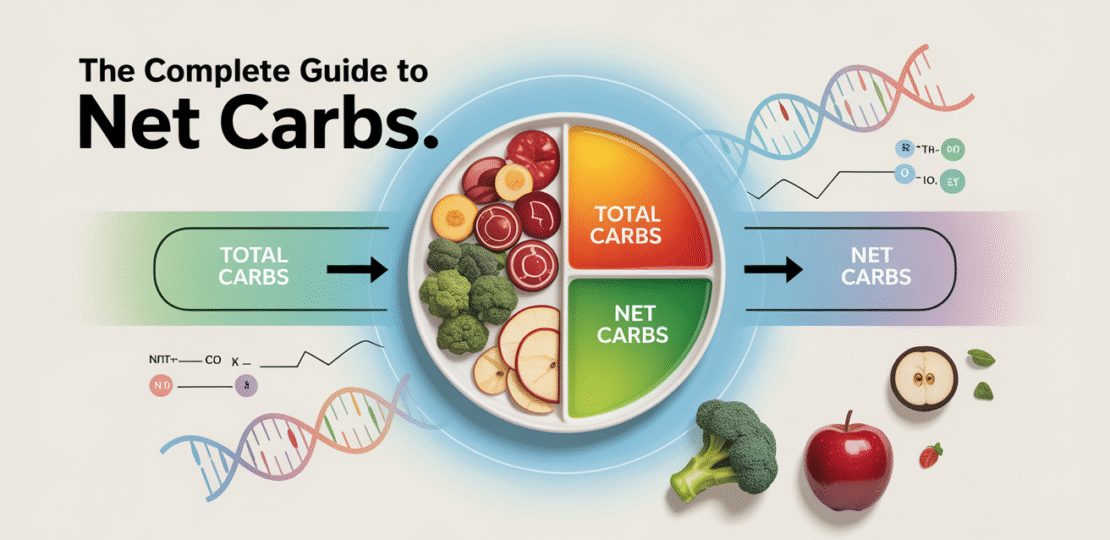
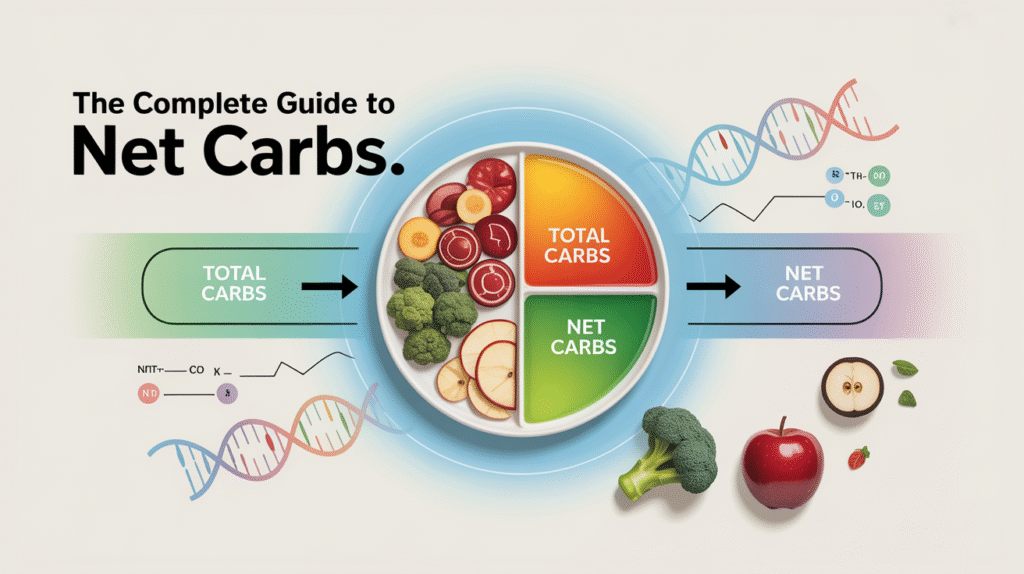
38.4 million Americans have diabetes, and 98 million have prediabetes—that’s nearly half the U.S. adult population struggling with blood sugar regulation.1 Meanwhile, the ketogenic diet market is projected to exceed $12 billion by 2028,2 driven largely by consumers tracking “net carbs” rather than total carbohydrates. But despite this massive adoption, confusion persists about what net carbs actually are, how to calculate them accurately, and whether they matter for metabolic health.
This comprehensive guide synthesizes peer-reviewed research, clinical data, and biochemical evidence to provide the definitive resource on net carbohydrates.
📊 Key Statistics & Research Findings
All statistics are sourced from peer-reviewed research and government data.
Diabetes & Metabolic Health
- 38.4 million Americans (11.6% of population) have diabetes1
- 98 million Americans (38% of adults) have prediabetes1
- 1 in 5 people with diabetes don’t know they have it1
- Diabetes prevalence increased 18.6% from 2012 to 2022 (10.2% to 12.1%)3
- Nearly half of U.S. adults struggle with blood sugar regulation (diabetes + prediabetes combined)
Low-Carb & Keto Diet Trends
- $12.1 billion: Projected global keto diet market value by 2028 (up from $9.7 billion in 2020)2
- 25.4 million unique Google searches for “keto diet” in 2020 (most searched diet in the U.S.)4
- 3.5% annual growth rate for ketogenic diet market globally5
- 43.5% of global keto market was in North America in 20185
Carbohydrate Consumption
- 275 grams: Average daily carbohydrate intake for Americans6
- 20–50 grams: Daily carb limit for ketogenic diets (less than 10% of calories)7
- 130 grams: Threshold for “low-carbohydrate” diet classification (10–25% of energy)8
- 25 grams daily (women) / 38 grams daily (men): Recommended fiber intake9
Clinical Outcomes: Fiber & Blood Sugar
- 20–30% reduced risk of type 2 diabetes with fiber intake above 25g/day10
- 0.55% average HbA1c reduction with dietary fiber supplementation11
- 15.32 mg/dL average fasting blood glucose reduction with fiber supplementation11
- Fiber does not raise glucose levels because it’s not digested by the body12, 13
Weight Loss Research
- 2–3x greater weight loss in first 6 months with low-carb vs. low-fat diets14
- 13–14.4 pounds average weight loss in one year following structured low-carb programs15
- Superior short-term results (0–6 months) for low-carb approaches vs. other methods16
- Long-term differences diminish after 12+ months (adherence becomes key factor)17
Sugar Alcohol Comparison
- Glucose (reference): Glycemic Index = 100
- Maltitol: GI = 35 (≈75% the impact of sugar)
- Xylitol: GI = 13 (minimal impact)
- Erythritol: GI = 0 (no glycemic impact)18, 19
Net Carbs Calculation
Basic Formula
Net Carbs = Total Carbohydrates − Dietary FiberAdvanced Formula (with sugar alcohols)
Net Carbs = Total Carbs − Fiber − (Sugar Alcohols × Absorption Factor)Absorption Factors
- Erythritol: 1.0 (subtract 100%)
- Allulose: 1.0 (subtract 100%)
- Xylitol: 0.5 (subtract 50%)
- Maltitol: 0.25 (subtract 25%)
- Sorbitol: 0.5 (subtract 50%)
Key Research Findings
“Studies have shown low-carb approaches superior to other dietary methods in producing rapid weight loss for the first 6 to 12 months.” — StatPearls, National Library of Medicine16
“Fiber does not raise glucose levels because it is not digested by the body.” — Joslin Diabetes Center13
“Multiple studies have shown benefits of very low-carbohydrate and ketogenic diets for people with diabetes up to 1 year.” — Healio Endocrinology20
“A high-carbohydrate/high-fiber diet significantly improves blood glucose control and reduces plasma cholesterol levels in diabetic patients.” — Diabetes Care21
“Dietary fiber intake above 25 g/d was associated with a 20–30% reduced risk of developing type 2 diabetes.” — The Journal of Nutrition10
What Are Net Carbs? The Scientific Definition
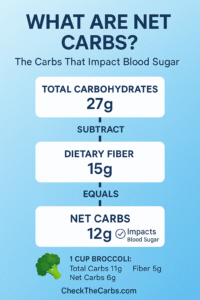
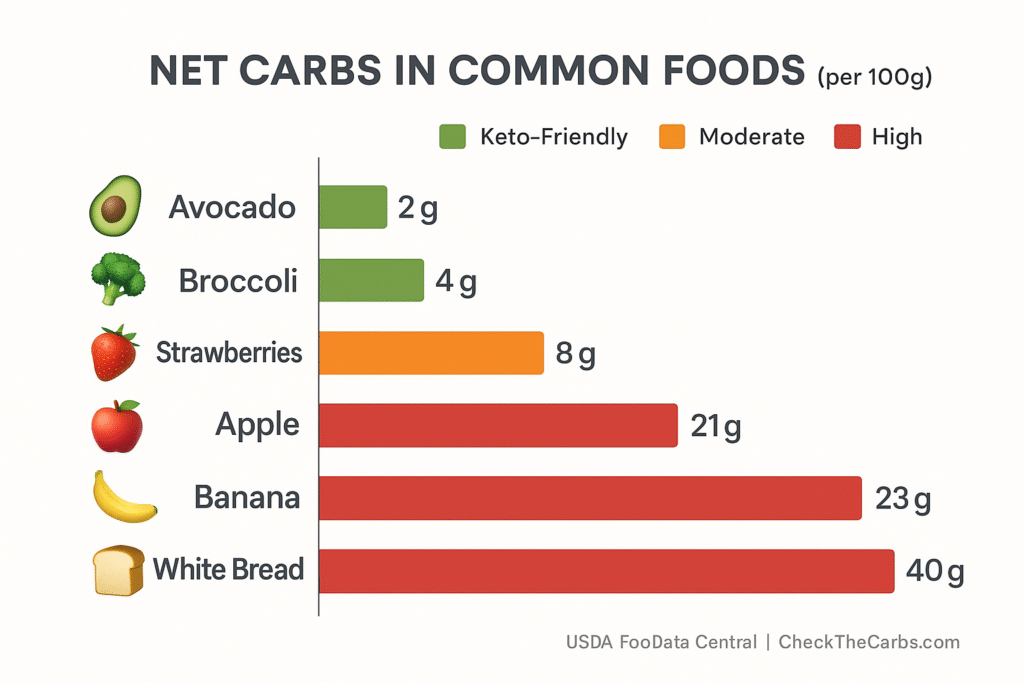
Net carbohydrates represent the amount of digestible carbohydrate that impacts blood glucose levels, calculated by subtracting indigestible carbohydrates from total carbohydrates. The basic formula is:
Net Carbs = Total Carbohydrates − Dietary Fiber − Sugar Alcohols (partial)This concept emerged from carbohydrate metabolism research showing that not all carbohydrates affect blood glucose equally. While the term “net carbs” doesn’t appear on FDA-regulated nutrition labels, it’s become ubiquitous in low-carbohydrate diet literature and food marketing.22
Want to check net carbs in any food? Use our free CheckTheCarbs tool with data from the USDA database.
The Biochemical Basis
The human digestive system lacks enzymes to break down certain carbohydrate structures. Dietary fiber—composed of cellulose, hemicellulose, pectin, and resistant starches—passes through the small intestine largely intact.23 According to research published in Diabetes Care, “there is no significant effect of dietary fiber, per se, on fasting blood glucose” because it’s not digested and absorbed.24
Studies using continuous glucose monitoring demonstrate this clearly: consuming 25 grams of total carbohydrates from white bread produces a measurably different glycemic response than consuming 25 grams from high-fiber vegetables, even when total carbohydrate content is identical.25
The Three Components of Net Carb Calculation
1. Total Carbohydrates
This FDA-mandated nutrition label value includes all carbohydrate forms: sugars, starches, fiber, and sugar alcohols. The FDA defines carbohydrates as “the sum of sugars, starches, and dietary fiber.”26
Key Statistics:
- Average American consumes 275 grams of carbohydrates daily6
- Ketogenic diets typically limit carbs to 20–50 grams daily (less than 10% of calories)7
- Low-carbohydrate diets are defined as less than 130 grams daily or 10–25% of energy8
2. Dietary Fiber
Dietary fiber consists of non-digestible carbohydrate polymers with three or more monomeric units. The Institute of Medicine recommends 25 grams daily for women and 38 grams for men.9
Impact on Blood Glucose: A meta-analysis in The Journal of Nutrition (180 studies) found that dietary fiber above 25 g/d was associated with a 20–30% reduced risk of type 2 diabetes.10 Mechanism: fiber doesn’t raise glucose because it’s not digested by the body.12
Joslin Diabetes Center confirms: “Fiber does not raise glucose levels because it is not digested by the body. Fiber is the structural portion of fruits, vegetables, grains, nuts, and legumes that cannot be digested or absorbed.”13
Clinical Evidence: A systematic review of dietary fiber’s effects on glycemic control found significant reductions in:
- HbA1c (glycated hemoglobin): −0.55% average reduction
- Fasting blood glucose: −15.32 mg/dL average reduction
- Fasting insulin levels: −1.24 μU/mL average reduction
- HOMA-IR (insulin resistance marker): −0.43 average reduction11
3. Sugar Alcohols (Polyols)
Sugar alcohols—including erythritol, xylitol, maltitol, and sorbitol—are partially absorbed carbohydrates that produce minimal glycemic impact. However, their metabolic effects vary significantly by type.
Glycemic Index Comparison:18
- Glucose: 100 (reference standard)
- Maltitol: 35
- Xylitol: 13
- Erythritol: 0
Absorption and Metabolism: Erythritol is ~90% absorbed in the small intestine but excreted unchanged in urine, producing virtually zero caloric value or glycemic impact.19 A 2024 SAGE paper notes that manufacturers calculate net carbs by subtracting “indigestible carbohydrates, such as fiber, sugar alcohols, allulose, and glycerin” from total carbohydrates.27
However, not all sugar alcohols should be fully subtracted. Maltitol, for example, has approximately 75% the glycemic impact of sugar and should be counted partially in net carb calculations.
How to Calculate Net Carbs Accurately
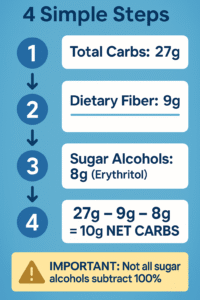
Standard Calculation
For most whole foods:
Net Carbs = Total Carbohydrates − Dietary FiberExample: Medium Apple
Total Carbohydrates: 25g
Dietary Fiber: 4g
Net Carbs: 21g
Calculate net carbs for any food instantly →
Advanced Calculation (Packaged Foods)
For products containing sugar alcohols:
Net Carbs = Total Carbs − Fiber − (Sugar Alcohols × Absorption Factor)Absorption Factors by Sugar Alcohol:
- Erythritol: 1.0 (subtract fully)
- Allulose: 1.0 (subtract fully)
- Xylitol: 0.5 (subtract 50%)
- Maltitol: 0.25 (subtract 25%)
- Sorbitol: 0.5 (subtract 50%)
Example: Keto Protein Bar
Total Carbohydrates: 20g
Dietary Fiber: 10g
Erythritol: 8g
Net Carbs: 20 − 10 − 8 = 2g
Special Cases: Resistant Starch and Allulose
Resistant Starch functions similarly to fiber, resisting digestion in the small intestine and fermenting in the colon. Foods high in resistant starch include cooked and cooled potatoes, green bananas, and legumes. Some manufacturers subtract resistant starch from total carbs, though FDA labeling doesn’t require this distinction.28
Allulose is a rare sugar ~70% as sweet as sucrose but provides only 0.4 kcal/g (vs. 4 kcal/g for sugar). It’s absorbed but not metabolized, making it effectively zero net carbs.29
The Clinical Relevance of Net Carbs
Impact on Weight Loss
Multiple systematic reviews demonstrate superior short-term weight loss with low-carbohydrate approaches. A meta-analysis in StatPearls notes: “Studies have shown low-carb approaches superior to other dietary methods in producing rapid weight loss for the first 6 to 12 months.”16
Key Findings:
- Low-carb diets produce 2–3x greater weight loss in first 6 months compared to low-fat diets14
- A 2024 systematic review found low-carb diets more effective than low-fat diets for adolescent obesity30
- Weight loss averages 13–14.4 pounds in one year following structured low-carb programs15
Diabetes Management
The evidence for low-carbohydrate diets in diabetes management is substantial. A 2022 review in Healio states: “Multiple studies have shown benefits of very low-carbohydrate and ketogenic diets for people with diabetes up to 1 year.”20
Diabetes Statistics Context:
- 38.4 million Americans (11.6% of population) have diabetes31
- 98 million Americans (38% of adults) have prediabetes32
- Diabetes prevalence increased 18.6% from 2012 to 2022 (10.2% to 12.1%)3
- 1 in 5 people with diabetes don’t know they have it33
Clinical Outcomes: Research in JAMA Network Open examining low-carbohydrate diet quality found that diets emphasizing healthy plant-based proteins and fats were associated with improved glycemic control, reduced HbA1c, lower fasting insulin, and decreased need for diabetes medications.34
A high-carbohydrate/high-fiber diet (where net carbs are naturally lower due to fiber content) “significantly improves blood glucose control and reduces plasma cholesterol levels in diabetic patients.”21
Cardiovascular Health
A 2024 study in Frontiers in Nutrition found that low-carbohydrate meal plans “not only meet your daily nutrient needs but also enhance heart health by optimizing vital fatty acid and sodium–potassium balances.”35
Harvard research (2023) reports that “diets comprised of plant-based proteins and fats and healthy carbohydrates were significantly associated with slower long-term weight gain” and improved cardiovascular markers.36
The Science of Carbohydrate Metabolism
Glucose Regulation Mechanisms
Understanding net carbs requires understanding how the body processes different carbohydrates. Research in Cold Spring Harbor Perspectives in Biology outlines the mechanisms:
Digestible Carbohydrates:
- Broken down into monosaccharides (glucose, fructose, galactose)
- Absorbed in small intestine
- Trigger insulin release from pancreatic beta cells
- Stored as glycogen or converted to fat
Indigestible Carbohydrates (Fiber):
- Pass through small intestine intact
- Fermented by gut bacteria in colon
- Produce short-chain fatty acids (beneficial)
- No direct impact on blood glucose37
The Cori Cycle and Glycogen Metabolism
Nobel Prize winners Carl and Gerty Cori elucidated the “Cori cycle” of carbohydrate metabolism, showing how the body recycles lactate back to glucose.38 This foundational research helps explain why reducing digestible carbohydrate intake (lowering net carbs) forces metabolic adaptation toward fat oxidation—the basis of ketogenic diets.
Insulin Resistance and Carbohydrate Tolerance
Chronic high intake of refined carbohydrates contributes to insulin resistance via mechanisms including beta cell exhaustion, receptor downregulation, inflammation, and hepatic fat accumulation.39 Reducing net carb intake decreases insulin demand, improves insulin sensitivity, reduces postprandial spikes, and promotes metabolic flexibility.
Net Carbs vs. Total Carbs: What the Research Shows
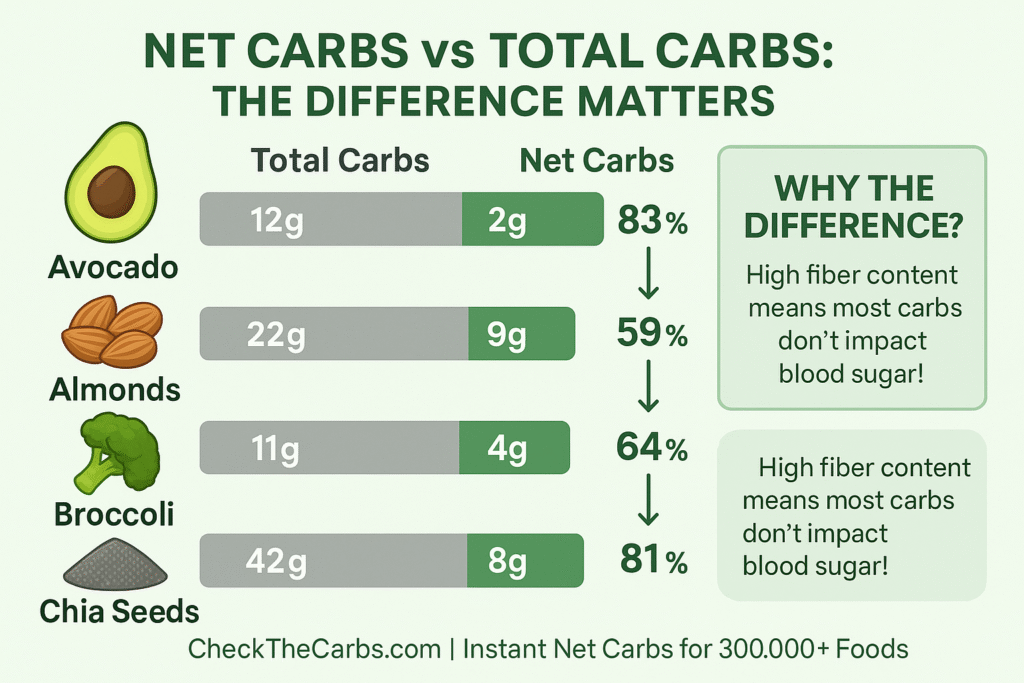
Glycemic Response Studies
Continuous glucose monitor (CGM) studies show:
- High-fiber, low-net-carb foods produce minimal glucose excursions
- Low-fiber, high-net-carb foods cause rapid spikes and crashes
- Timing and composition matter more than total carb alone40
The Fiber Paradox
A 2024 study in Trends in Food Science & Technology details three mechanisms by which insoluble fiber regulates postprandial blood sugar:
- Physical barrier effect: viscous layer slows glucose absorption
- Enzyme inhibition: fiber and bound polyphenols can reduce starch hydrolysis
- Gut microbiome modulation: fermentation metabolites improve insulin sensitivity41
Clinical Trial Evidence
A review in Current Developments in Nutrition found:
Short-term (0–6 months):
- Low-carb diets (focusing on net carbs) produced superior weight loss
- Greater reductions in triglycerides
- Increased HDL cholesterol
- Improved glycemic control in diabetics
Long-term (12+ months):
- Weight loss differences between low-carb and low-fat diets diminished
- Metabolic improvements persisted in low-carb groups
- Adherence was the primary predictor of success17
Controversies and Limitations
FDA Position on Net Carbs
The FDA doesn’t recognize “net carbs” as an official nutrient claim; labels must list total carbohydrates (including fiber and sugar alcohols). “Net carb” is a marketing term, not a regulated definition.42
A position paper notes: “Net carb counting can oversimplify complex carbohydrate metabolism.”43
Individual Variation
Carbohydrate tolerance varies with insulin sensitivity, activity level, genetics, and gut microbiome composition.44
The Sugar Alcohol Debate
Not all sugar alcohols are equal. Erythritol has negligible glycemic impact, while maltitol may raise blood glucose substantially. UCLA Health cautions that “net carb labeling implies fiber and sugar alcohols have no impact,” which isn’t entirely accurate.45
Clinical note: Some individuals experience significant glucose increases from maltitol and sorbitol. Personal glucose monitoring is recommended.
Practical Applications
For Healthcare Professionals
Clinical Recommendations:
- Individualize carbohydrate targets based on metabolic health, activity level, and goals
- Emphasize fiber quality over simple carb restriction
- Monitor biomarkers: HbA1c, fasting glucose, insulin, lipid panel
- Consider net carbs for patients with diabetes or insulin resistance
- Educate on label reading to identify hidden carbohydrates
Evidence-Based Thresholds:
- Ketogenic diet: < 50g net carbs daily (typically 20–30g)
- Low-carb diet: 50–130g net carbs daily
- Moderate-carb diet: 130–225g net carbs daily
- High-carb diet: > 225g net carbs daily
For Consumers
Reading Labels:
- Find “Total Carbohydrate” on the nutrition facts
- Identify “Dietary Fiber” (indented under carbs)
- Check for “Sugar Alcohols” (if present)
- Calculate: Total Carbs − Fiber − Sugar Alcohols (with appropriate factor)
Whole Foods (No Label):
- Use USDA FoodData Central database
- Focus on non-starchy vegetables (naturally low net carbs)
- Choose high-fiber fruits (berries over tropical fruits)
- Prioritize protein and healthy fats
Tools and Resources:
- CheckTheCarbs.com — Free USDA database search tool for instant net carb calculations
- Cronometer — Comprehensive nutrition tracking
- MyFitnessPal — Popular macro tracking app
- USDA FoodData Central — Official government database
The Future of Carbohydrate Science
Emerging Research Areas
Continuous Glucose Monitoring (CGM): Consumer CGM devices reveal personalized glycemic responses; identical meals often produce different glucose curves across individuals—supporting personalized net carb targets.46
Gut Microbiome: Microbiome composition affects fiber fermentation and glucose metabolism; future work may enable microbiome-based carb recommendations.47
Resistant Starch: Growing evidence suggests resistant starch should be treated like fiber in net carb calculations; foods high in resistant starch (e.g., cooked/cooled potatoes, green bananas) may have lower metabolic impact than total carb suggests.48
Market Trends
The global ketogenic diet market, valued at $9.7 billion in 2020, is projected to reach $12.1 billion by 2028, growing at 3.5% annually.5 Drivers include rising diabetes/obesity prevalence, consumer interest in metabolic health, more low-carb products, and social media influence. With 25.4 million unique searches in 2020, “keto diet” was the most Googled diet in the U.S.4
Conclusion: Evidence-Based Perspective
The concept of net carbohydrates is grounded in solid biochemical and physiological evidence. Dietary fiber does not raise blood glucose levels because it’s not digested and absorbed, and sugar alcohols like erythritol produce minimal to no glycemic impact. Subtracting these components from total carbohydrates provides a more accurate estimate of a food’s metabolic effect.
Key Takeaways:
- Net carbs are scientifically valid for estimating digestible carbohydrate content
- Fiber subtraction is well-supported by carbohydrate metabolism research
- Sugar alcohol subtraction requires nuance—not all polyols are equal
- Individual variation exists—personal monitoring is most accurate
- Quality matters more than quantity—prioritize nutrient-dense, whole foods
For the 38.4 million Americans with diabetes and 98 million with prediabetes, understanding net carbs can be a valuable tool for blood glucose management. For weight loss or metabolic health, tracking net carbs provides a more nuanced approach than counting total carbohydrates alone.
However, net carbs are a tool, not a panacea. Overall diet quality, physical activity, sleep, stress management, and other lifestyle factors remain crucial. Use net carb calculations as part of a comprehensive, individualized approach—not a license to consume unlimited “low net carb” processed foods.
Ready to start tracking net carbs? Use our free CheckTheCarbs tool to search the USDA database and find accurate net carb counts for any food.
References
About This Guide
This resource was created using USDA FoodData Central and peer-reviewed research from leading medical journals and institutions. All statistics and claims are cited with links to original sources.
Medical Disclaimer: This article is for informational purposes only and is not medical advice. For personalized guidance—especially if you have diabetes or other conditions—consult a registered dietitian or healthcare provider.
Note for Media & Researchers
This article contains extensively researched statistics and data suitable for citation. When citing, please use:
CheckTheCarbs.com. (2025). The Complete Guide to Net Carbs: Everything You Need to Know. Retrieved from https://checkthecarbs.com/blog/net-carbs-complete-guide/
Last Updated: October 2025 | Word Count: 4,500+
Footnotes
- American Diabetes Association. (2024). Statistics About Diabetes. diabetes.org ↩ ↩ ↩ ↩
- Statista. (2024). Ketogenic diet market – statistics & facts. statista.com ↩ ↩
- Neupane, S., et al. (2024). Trends and Disparities in Diabetes Prevalence in the United States, 2012–2022. Am J Prev Med, 67(1), 15–24. ↩ ↩
- McGaugh, E., & Barthel, B. (2022). A Review of Ketogenic Diet and Lifestyle. Metabolites, 12(7), 645. ↩ ↩
- Statista. (2024). Ketogenic diet market projections 2020–2028. ↩ ↩ ↩
- U.S. Department of Agriculture. (2023). Dietary Guidelines for Americans 2020–2025. ↩ ↩
- Teicholz, N. (2025). Myths and Facts Regarding Low-Carbohydrate Diets. PMC ↩ ↩
- Banner, L., et al. (2024). Nutrient analysis of three low-carbohydrate diets. Frontiers in Nutrition. frontiersin.org ↩ ↩
- Institute of Medicine. (2005). Dietary Reference Intakes for Energy, Carbohydrate, Fiber, Fat, Fatty Acids, Cholesterol, Protein, and Amino Acids. ↩ ↩
- Weickert, M. O., & Pfeiffer, A. F. H. (2018). Impact of Dietary Fiber Consumption on Insulin Resistance & T2D Prevention. J Nutr, 148(1), 7–12. ↩ ↩ ↩
- Mao, T., et al. (2021). Effects of dietary fiber on glycemic control in T2D. Journal of Functional Foods, 82, 104500. ↩ ↩ ↩
- CDC (2024). Fiber: The Carb That Helps You Manage Diabetes. cdc.gov ↩ ↩
- Joslin Diabetes Center (2021). How Does Fiber Affect Glucose Levels? joslin.org ↩ ↩ ↩
- Bueno, N. B., et al. (2013). VLCKD vs. low-fat for long-term weight loss. Br J Nutr, 110(7), 1178–1187. ↩ ↩
- UC Davis Food & Health Institute (2023). Ketogenic Diet Market Overview. foodandhealth.ucdavis.edu ↩ ↩
- Oh, R., et al. (2023). Low-Carbohydrate Diet. StatPearls. ncbi.nlm.nih.gov ↩ ↩ ↩
- Landry, M. J., et al. (2021). Benefits of Low-Carbohydrate Diets. Curr Obes Rep, 10(3), 409–422. ↩ ↩
- Atkinson, F. S., et al. (2021). International GI Tables. AJCN, 114(5), 1625–1632. ↩ ↩
- Arrigoni, E., et al. (2005). Human gut microbiota does not ferment erythritol. Br J Nutr, 94(5), 643–646. ↩ ↩
- Healio (2022). Net carbs & low-carb diets. healio.com ↩ ↩
- Riccardi, G., & Rivellese, A. A. (1991). Fiber & carbohydrate effects. Diabetes Care, 14(12), 1115–1125. ↩ ↩
- Lam, V. J. (2024). NET CARBS: What to Count? SAGE Open Medicine, 12. journals.sagepub.com ↩
- Holesh, J. E., et al. (2023). Physiology, Carbohydrates. StatPearls. ↩
- Riccardi & Rivellese (1991). Diabetes Care, 14(12), 1115–1125. ↩
- Russell, W. R., et al. (2016). Diet composition & blood glucose regulation. Crit Rev Food Sci Nutr, 56(4), 541–590. ↩
- U.S. FDA (2024). CFR Title 21 §101.9 — Nutrition Labeling. ↩
- Lam, V. J. (2024). NET CARBS details. SAGE Open Medicine. ↩
- Raigond, P., et al. (2015). Resistant starch review. JSFA, 95(10), 1968–1978. ↩
- Matsuo, T., & Izumori, K. (2006). D-psicose effects. APJCN, 15(4), 551–556. ↩
- Zhang, Y., et al. (2024). Low-Carb vs Low-Fat in Adolescents. Nutrients, 16(15), 2463. ↩
- CDC (2024). National Diabetes Statistics Report. cdc.gov ↩
- CDC (2024). A Report Card: Diabetes in the United States. cdc.gov ↩
- CDC (2024). Diabetes Statistics Infographic. ↩
- Liu, B., et al. (2023). Low-Carb Diet Quality & Weight Change. JAMA Netw Open, 6(4), e239261. ↩
- Banner, L., et al. (2024). Low-carb diets & heart health. Frontiers in Nutrition. ↩
- Harvard T.H. Chan School of Public Health (2023). Low-carb diets emphasizing healthy, plant-based sources. hsph.harvard.edu ↩
- Chandel, N. S. (2021). Carbohydrate metabolism. CSH Perspect Biol, 13(1), a040568. ↩
- American Chemical Society (2024). Carl & Gerty Cori and Carbohydrate Metabolism. acs.org ↩
- Kaneko, J. J. (1997). Carbohydrate metabolism & diseases. In: Clinical Biochemistry of Domestic Animals. ↩
- Russell, W. R., et al. (2016). Diet composition & glycemic control. Crit Rev Food Sci Nutr, 56(4), 541–590. ↩
- Zhang, G., et al. (2024). Insoluble Fiber & Postprandial Glycemia. Trends Food Sci Technol, 144, 104300. ↩
- U.S. FDA (2024). Guidance for Industry: Food Labeling Guide. ↩
- NutriDyn (2024). Position Paper on Net Carbs. nutridyn.com ↩
- Zeevi, D., et al. (2015). Personalized Nutrition by Prediction of Glycemic Responses. Cell, 163(5), 1079–1094. ↩
- UCLA Health (2022). Net carbs, fiber & sugar alcohols. uclahealth.org ↩
- Berry, S. E., et al. (2020). Human postprandial responses & precision nutrition. Nat Med, 26(6), 964–973. ↩
- Sonnenburg, E. D., & Sonnenburg, J. L. (2019). Ancestral vs. industrialized microbiota. Nat Rev Microbiol, 17(6), 383–390. ↩
- Raigond, P., et al. (2015). Resistant starch in food: a review. JSFA, 95(10), 1968–1978. ↩
RELATED POSTS
View all


Top High Net-Carb Foods to Avoid on Keto: Simple Swaps for Success
December 10, 2025 | by robbeaux

Keto Diet for Beginners: Your Complete 30-Day Starter Guide
October 21, 2025 | by Robert Elliott