



Welcome to the most comprehensive guide on net carbs in dairy products. For those on a low-carb, keto, or health-conscious diet, the dairy aisle can be a source of both incredible nutrition and hidden carbohydrates. From creamy cheeses and rich butters to milk and yogurt, dairy is a staple in many households. However, the carbohydrate content, primarily from a sugar called lactose, varies dramatically across different products. Understanding how to calculate and track the net carbs in dairy products is essential for achieving your dietary goals without sacrificing flavor or essential nutrients.
This in-depth, research-backed article serves as your ultimate linkable asset, demystifying the world of dairy on a low-carb diet. We will explore the science of lactose, provide a master comparison table with USDA data for over 15 dairy products, and debunk common myths—like the one about low-fat dairy being lower in carbs. By the end of this guide, you will be able to confidently navigate the dairy aisle, making informed choices that support your metabolic health and low-carb lifestyle. A thorough understanding of the net carbs in dairy products is the first step.
Ready to master your diet? Find your personal daily carb target and access hundreds of low-carb recipes with our free tools at CheckTheCarbs.com!
Key Research Findings & Statistics for Journalists and Health Bloggers
📊 Quick Reference: Quotable Statistics on Net Carbs in Dairy Products
- Skim milk and whole milk have nearly identical carbohydrate content (4.96g vs. 4.78g per 100g), debunking the myth that low-fat dairy is lower in carbs (USDA, 2024).
- Cheddar cheese contains only 1.28g of net carbs per 100g, making it one of the most keto-friendly dairy options available.
- Greek yogurt contains 23% fewer net carbs than regular yogurt (3.60g vs. 4.66g per 100g), due to the straining process that removes some of the whey and lactose.
- Heavy cream, despite being 36% fat, contains only 2.79g of net carbs per 100g, making it a staple for low-carb coffee and sauces.
- Butter is virtually carb-free, with only 0.06g of net carbs per 100g.
- Epidemiological evidence supports an **inverse relationship between adequate intake of dairy foods and susceptibility to type 2 diabetes** (Hirahatake et al., 2014, *Metabolism*).
- Higher dairy intake is associated with a **lower risk of metabolic syndrome and hypertension** (Bhavadharini et al., 2020).
These statistics on the carbohydrate content in dairy are freely available for citation. All data is sourced from peer-reviewed research and the USDA FoodData Central database. For complete data tables and further analysis on net carbs in dairy products, please continue reading.
Table of Contents
- What Are Net Carbs in Dairy Products? The Role of Lactose
- Master List: Net Carbs in Common Dairy Products
- Full-Fat vs. Low-Fat: Understanding Net Carbs in Dairy Products
- The Best and Worst Dairy for a Low-Carb Diet
- Fermented Dairy and its Impact on Net Carbs
- Is Lactose-Free Dairy Low in Net Carbs?
- Low-Carb Dairy Alternatives and their Net Carbs
- Practical Tips for Incorporating Dairy
- Common Mistakes in Tracking Net Carbs in Dairy
- Conclusion: Making Smart Choices About Net Carbs in Dairy Products
What Are Net Carbs in Dairy Products? The Role of Lactose
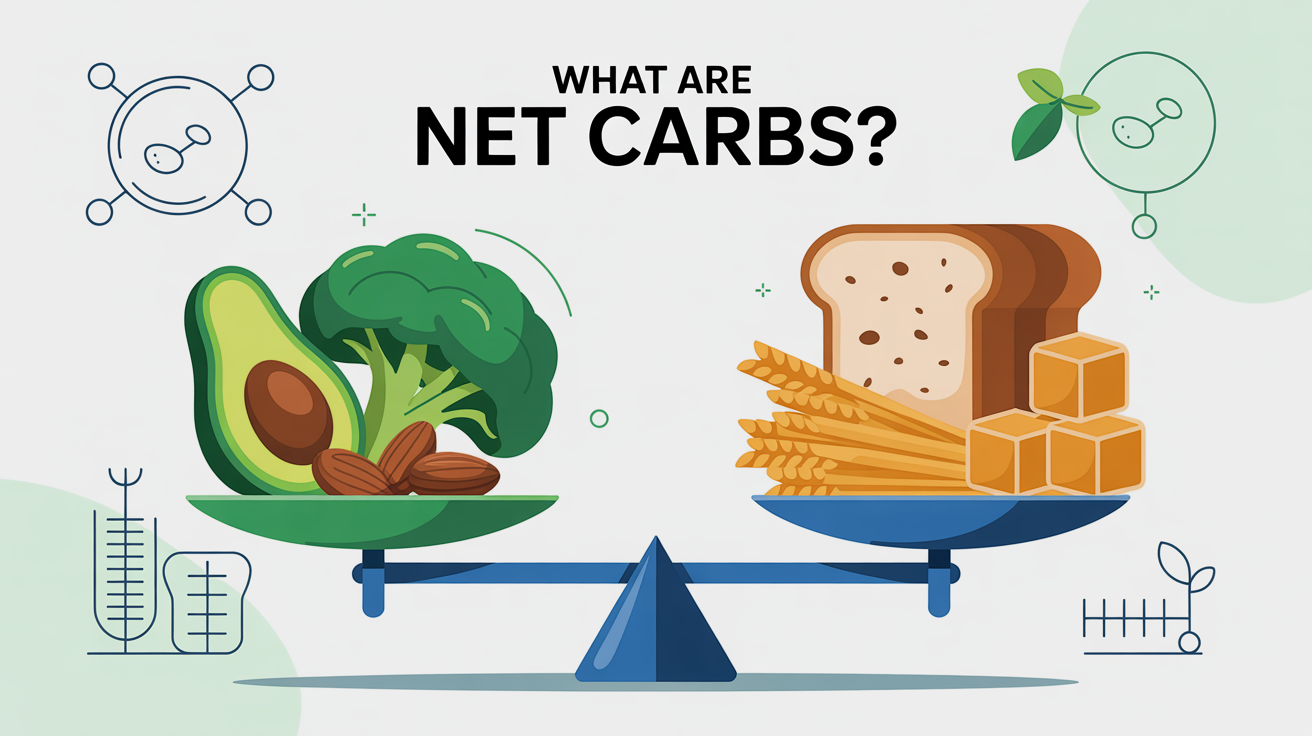
The primary source of carbohydrates in dairy is a natural sugar called **lactose**. Unlike grains and vegetables, dairy products contain virtually no dietary fiber. This makes calculating their net carb content incredibly straightforward: for dairy, the total carbohydrate count is the net carb count. This is a fundamental point when assessing the net carbs in dairy products.
Total Carbohydrates (Lactose) = Net Carbs
Lactose is a disaccharide, meaning it is composed of two simpler sugars: glucose and galactose. When we consume dairy, the enzyme lactase in our small intestine breaks lactose down into these two components, which are then absorbed into the bloodstream, raising blood sugar levels. The amount of lactose varies significantly depending on how the dairy product is processed. Fermentation and straining, for example, can reduce the lactose content, thereby lowering the carbohydrate load. This processing is a key factor in the final count of net carbs in dairy products.
Master List: Net Carbs in Common Dairy Products
Here is the ultimate reference table of net carbs in dairy products, comparing over 15 common options. All data is for a 100-gram serving (about 3.5 ounces) and is sourced from the USDA FoodData Central database. Use this guide to make informed decisions about which dairy products fit your low-carb lifestyle. Understanding the specific carbohydrate content is crucial for success.
| Dairy Product (per 100g) | Net Carbs | Calories | Protein | Fat |
|---|---|---|---|---|
| Butter (salted) | 0.06 g | 717 | 0.85 g | 81.11 g |
| Cheddar Cheese | 1.28 g | 403 | 24.90 g | 33.14 g |
| Mozzarella Cheese (whole milk) | 2.19 g | 280 | 27.47 g | 17.12 g |
| Heavy Cream | 2.79 g | 340 | 2.05 g | 36.08 g |
| Parmesan Cheese (hard) | 3.22 g | 431 | 38.46 g | 28.61 g |
| Cottage Cheese (4% milkfat) | 3.38 g | 98 | 11.12 g | 4.30 g |
| Greek Yogurt (whole milk, plain) | 3.60 g | 97 | 9.00 g | 5.00 g |
| Greek Yogurt (nonfat, plain) | 3.94 g | 59 | 10.19 g | 0.39 g |
| Cream Cheese | 4.07 g | 342 | 5.93 g | 34.24 g |
| Half-and-Half | 4.30 g | 130 | 2.96 g | 11.50 g |
| Kefir (plain, low-fat) | 4.48 g | 41 | 3.79 g | 1.02 g |
| Sour Cream | 4.63 g | 193 | 2.44 g | 19.35 g |
| Regular Yogurt (whole milk, plain) | 4.66 g | 61 | 3.47 g | 3.25 g |
| Whole Milk | 4.78 g | 61 | 3.15 g | 3.25 g |
| 2% Milk | 4.80 g | 50 | 3.30 g | 1.98 g |
| Skim Milk (Nonfat) | 4.96 g | 34 | 3.37 g | 0.08 g |
Full-Fat vs. Low-Fat: Understanding Net Carbs in Dairy Products
One of the most persistent myths in nutrition is that low-fat or nonfat dairy products are healthier and lower in carbohydrates. The data tells a different story. When it comes to the net carbs in dairy products, the fat content has very little impact. The carbohydrates in dairy come from lactose, not fat. Removing fat does not remove the lactose. This is a critical point to remember when evaluating the carbohydrate content in these foods.
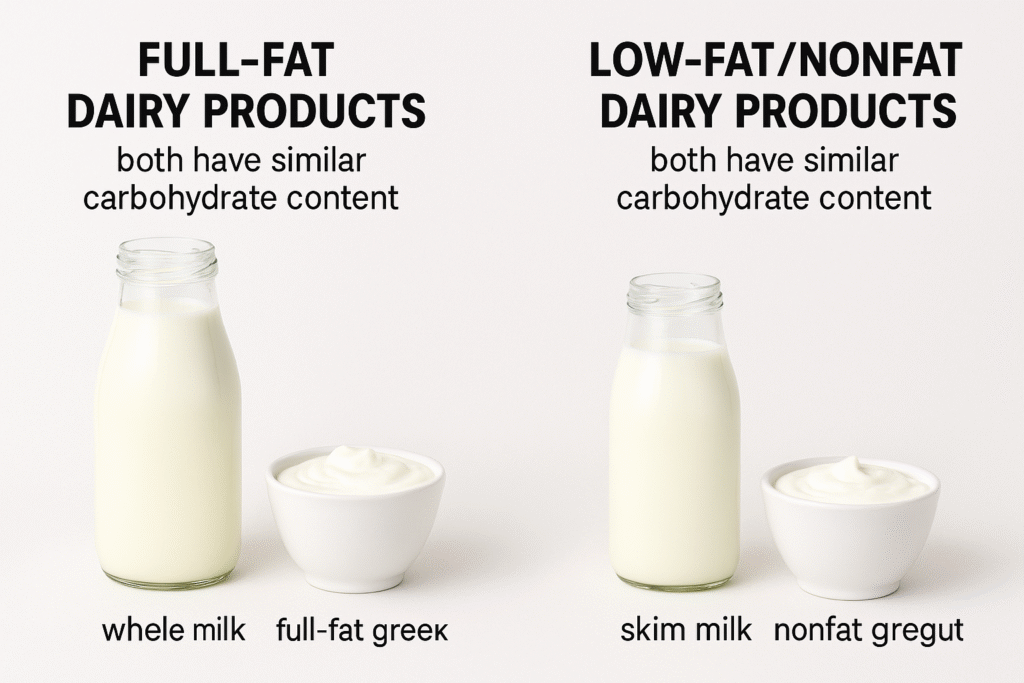
As the USDA data shows, whole milk (4.78g net carbs) and skim milk (4.96g net carbs) have nearly identical carbohydrate counts. The same is true for full-fat Greek yogurt (3.60g) and nonfat Greek yogurt (3.94g). In fact, the process of creating low-fat dairy products can sometimes involve adding milk solids or other fillers to improve the texture, which can slightly increase the carb count. Therefore, choosing full-fat dairy is often the better option on a low-carb diet, as the fat provides greater satiety and flavor without adding extra carbs. This is a crucial takeaway for anyone managing their intake of net carbs in dairy products.
The Best and Worst Dairy for a Low-Carb Diet
Based on the data, we can categorize dairy products into tiers based on their suitability for a low-carb diet. Understanding the specific net carbs in dairy products is key to making these distinctions.
Best Choices (Lowest Carb)
These dairy products are extremely low in net carbs and are staples of most ketogenic and low-carb diets.
- Butter: At virtually zero carbs, butter is a fantastic source of fat for cooking and flavor.
- Hard Cheeses (Cheddar, Parmesan): With only 1-3g of net carbs per 100g, these cheeses are perfect for snacking, melting, and adding flavor to meals.
- Heavy Cream: With just 2.79g of net carbs, it’s the ideal choice for coffee, sauces, and desserts.
Good Choices (in Moderation)
These products have a moderate carb count and can be included in a low-carb diet with careful portion control.
- Greek Yogurt (plain, full-fat): At 3.60g of net carbs, it’s a great source of protein and probiotics.
- Cottage Cheese: With 3.38g of net carbs, it’s another excellent high-protein option.
- Sour Cream and Cream Cheese: Around 4g of net carbs, these are great for dips and spreads in moderation.
Worst Choices (Avoid)
These dairy products are the highest in carbohydrates and should be avoided on a low-carb or ketogenic diet.
- Milk (all varieties): With nearly 5g of net carbs per 100g (and about 12g per cup), milk is too high in sugar for a strict low-carb diet.
- Flavored Yogurts: These are loaded with added sugars and can contain 20-30g of net carbs per serving.
- Sweetened Condensed Milk: This is essentially milk and sugar, with over 50g of net carbs per 100g.
Fermented Dairy and its Impact on Net Carbs
Fermented dairy products like yogurt and kefir undergo a process where beneficial bacteria (probiotics) consume some of the lactose, converting it into lactic acid. This process not only reduces the net carbs in these dairy products but also provides significant health benefits. The probiotics in fermented dairy can improve gut health, enhance digestion, and boost the immune system.
Scientific Insight: The straining process used to make Greek yogurt removes much of the liquid whey, which contains a significant portion of the lactose. This is why Greek yogurt (3.60g net carbs) is consistently lower in carbohydrates than regular yogurt (4.66g net carbs). Always choose plain, unsweetened varieties to avoid added sugars, which would negate the benefits of the lower carbohydrate content.
Is Lactose-Free Dairy Low in Net Carbs?
Warning: Lactose-free milk is **not** low-carb. The manufacturing process simply adds the lactase enzyme to the milk, which pre-digests the lactose into glucose and galactose. The total carbohydrate count remains the same. A cup of lactose-free milk still contains about 12g of net carbs, making it unsuitable for a low-carb diet. This is a common misconception when considering the net carbs in dairy products.
Low-Carb Dairy Alternatives and their Net Carbs
For those who are lactose intolerant or choose to avoid dairy, there are many excellent low-carb alternatives available. Understanding the net carbs in dairy products and their alternatives is crucial for a well-rounded diet.
- Unsweetened Almond Milk: Typically contains only 1-2g of net carbs per cup.
- Coconut Milk (canned): Full-fat canned coconut milk is great for cooking and contains about 3g of net carbs per 1/4 cup.
- Nut-Based Cheeses and Yogurts: Many brands now offer low-carb cheeses and yogurts made from almonds, cashews, or other nuts. Always check the label for added starches or sugars.
Practical Tips for Incorporating Dairy
Successfully managing your intake of net carbs in dairy products requires a mindful approach.
- Choose Full-Fat: Opt for full-fat versions of cheese, yogurt, and cream for better flavor, satiety, and often slightly lower carb counts.
- Avoid Flavored Products: Never buy dairy products with added fruit, sugar, or flavorings. Add your own low-carb berries or sweeteners if needed.
- Read Labels Carefully: Be vigilant about checking the nutrition facts on packaged dairy, especially yogurts and creamers, for hidden sugars and fillers.
Common Mistakes in Tracking Net Carbs in Dairy
A common mistake is assuming all dairy is low-carb. While cheese and butter are keto staples, milk and many yogurts are not. Another pitfall is overconsuming even low-carb dairy like cheese. While delicious, the calories can add up quickly, and some people find that high dairy consumption can stall weight loss. Pay attention to your body’s response when managing your intake of net carbs in dairy products.
Conclusion: Making Smart Choices About Net Carbs in Dairy Products
Understanding the net carbs in dairy products is a cornerstone of a successful low-carb diet. The key is to recognize that carbohydrates in dairy come from lactose, and the processing method dramatically affects the final carb count. By choosing high-fat, low-lactose options like hard cheeses, butter, and heavy cream, and including fermented products like plain Greek yogurt in moderation, you can enjoy the rich flavor and powerful nutrients of dairy without compromising your health goals. With the knowledge from this guide, you are now fully equipped to make smart, informed decisions in the dairy aisle.
Ready to build your perfect low-carb meal plan? Use our free tools and find hundreds of delicious recipes at CheckTheCarbs.com!
References
- Hirahatake, K. M., Slavin, J. L., Maki, K. C., & Adams, S. H. (2014). Associations between dairy foods, diabetes, and metabolic health: potential mechanisms and future directions. Metabolism, 63(5), 618–627. https://doi.org/10.1016/j.metabol.2014.02.009
- Bhavadharini, B., Dehghan, M., Mente, A., Rangarajan, S., Sheridan, P., Mohan, V., … & Yusuf, S. (2020). Association of dairy consumption with metabolic syndrome, hypertension and diabetes in 147 812 individuals from 21 countries. BMJ Open Diabetes Research and Care, 8(1), e000826. http://dx.doi.org/10.1136/bmjdrc-2019-000826
- U.S. Department of Agriculture, Agricultural Research Service. FoodData Central, 2024. https://fdc.nal.usda.gov/
RELATED POSTS
View all