

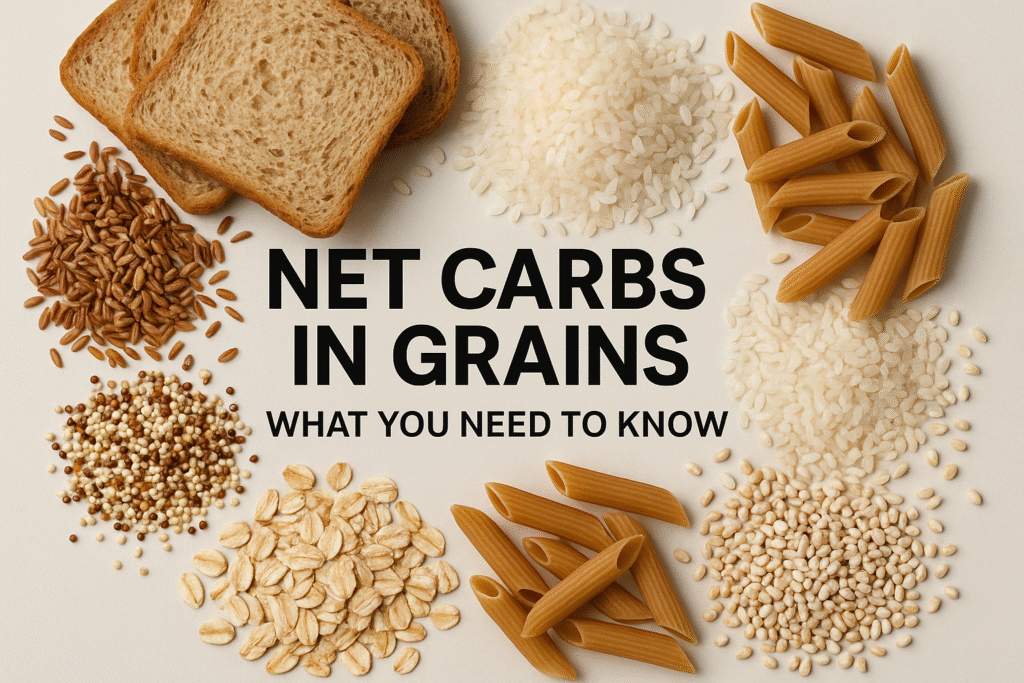
Welcome to the definitive guide on net carbs in grains. For anyone navigating a low-carb, keto, or paleo lifestyle, the world of grains can seem like a minefield. Grains are a staple in diets worldwide, yet they are notoriously high in carbohydrates, making them a primary target for reduction. However, not all grains are created equal. Understanding the critical difference between whole grains and refined grains—and more importantly, their net carb content—is the key to making informed choices that align with your health and dietary goals. This is a crucial aspect of managing net carbs in grains.
This guide is designed to be your ultimate resource, a comprehensive linkable asset that cuts through the confusion. We will explore the science of net carbs in grains, provide a detailed comparison of common varieties, and uncover which grains, if any, can fit into a low-carb diet. Backed by scientific research and USDA data, this article will equip you with the knowledge to confidently manage your grain intake. We will also explore the critical role of the Glycemic Index, practical tips for meal planning, and common mistakes to avoid when managing your consumption of net carbs in grains. A deep dive into the net carbs in grains is essential for anyone serious about their low-carb journey.
Ready to take control of your diet? Calculate your personal carb tolerance and discover hundreds of low-carb recipes at CheckTheCarbs.com/calculator!
Key Research Findings & Statistics for Journalists and Health Bloggers
📊 Quick Reference: Quotable Statistics on Net Carbs in Grains
- Refined grain consumption is associated with a 37% increased risk of metabolic syndrome, while whole grain consumption is linked to a 20% reduced risk (Guo et al., 2021, Frontiers in Nutrition). This highlights the importance of understanding net carbs in grains.
- White bread contains 33.2% more net carbs than whole wheat bread (47.02g vs 35.29g per 100g), highlighting the impact of refining on the net carbs in grains (USDA, 2024).
- Oatmeal (cooked) is one of the lowest-carb whole grains, containing just 10.3g of net carbs per 100g serving (USDA, 2024). This makes it a better choice when considering the net carbs in grains.
- Cornflakes, a common refined grain breakfast cereal, contain a staggering 81g of net carbs per 100g, making it one of the highest-carb grain products available (USDA, 2024). This is a prime example of high net carbs in grains.
- Long-term whole grain intake significantly reduces fasting glucose levels compared to refined grain consumption, improving glycemic control (Li et al., 2022, Journal of Diabetes Investigation).
- A daily intake of over 150g of whole grains is recommended as a population-wide approach for type 2 diabetes prevention (Ying et al., 2024).
- Barley has one of the lowest Glycemic Index (GI) values among grains at 28, while white bread has a high GI of 75, causing a much faster spike in blood sugar.
These statistics are freely available for citation in articles, blog posts, and health content. All data is sourced from peer-reviewed research and official USDA databases. For the complete data table and additional insights on net carbs in grains, continue reading below.
Table of Contents
- What Are Net Carbs in Grains?
- Whole Grains vs. Refined Grains: The Critical Difference
- Master List: Net Carbs in Common Grains
- Glycemic Index and Its Impact on Blood Sugar
- The Best and Worst Grains for a Low-Carb Diet
- Low-Carb Grain Alternatives and Substitutes
- Practical Tips for Managing Grain Intake
- Common Mistakes to Avoid
- Conclusion: Making Smart Choices About Net Carbs in Grains
What Are Net Carbs in Grains?
To understand the impact of grains on a low-carb diet, it is crucial to grasp the concept of net carbs. The term “net carbs” refers to the carbohydrates that are actually digested and absorbed by the body, thereby affecting blood sugar and insulin levels. The calculation is simple but essential for anyone monitoring their carb intake. Understanding this is the first step in mastering net carbs in grains.
Total Carbohydrates – Dietary Fiber = Net Carbs
Dietary fiber is a type of carbohydrate that the human body cannot break down and absorb. It passes through the digestive system largely intact, providing bulk and feeding beneficial gut bacteria without causing a spike in blood glucose. This is why fiber is subtracted from total carbs to determine the true metabolic impact of a food. For those on a low-carb diet, focusing on the net carbs in grains is a far more accurate and effective strategy than just counting total carbohydrates. The higher the fiber, the lower the net carbs in grains.
Whole Grains vs. Refined Grains: The Critical Difference in Net Carbs in Grains
The most significant factor determining the net carbs in grains is whether the grain is whole or refined. This distinction lies in the processing method and has profound implications for nutrition and health. Choosing the right type of grain is fundamental to controlling your intake of net carbs in grains.
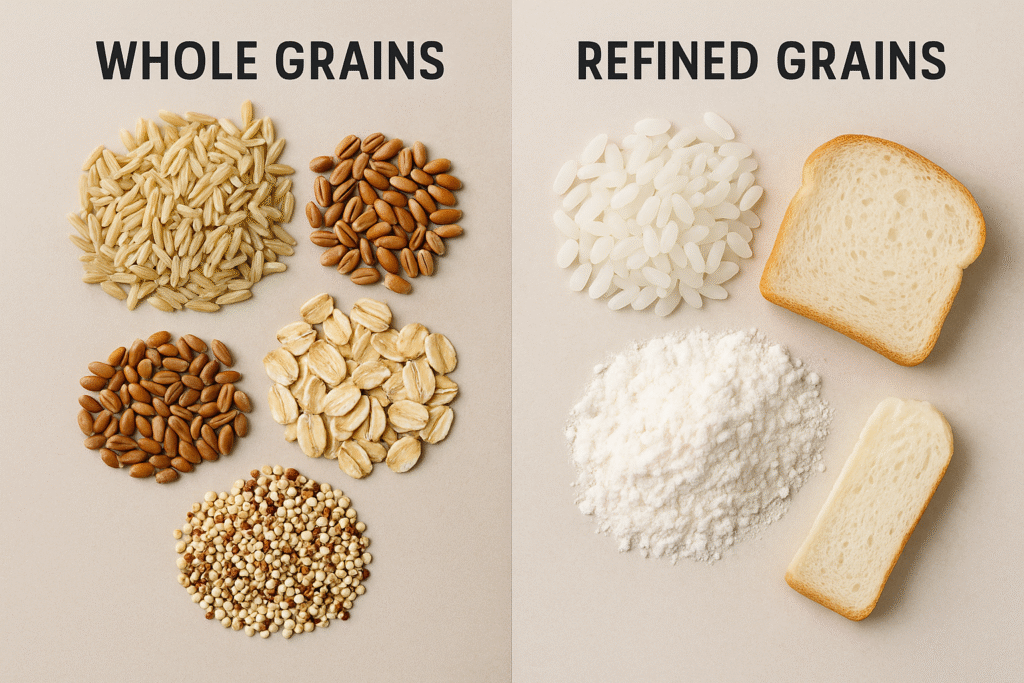
Whole grains contain all three parts of the original kernel: the bran, the germ, and the endosperm. The bran is the fiber-rich outer layer, the germ is the nutrient-packed embryo, and the endosperm is the starchy carbohydrate component. This complete structure means whole grains are rich in fiber, vitamins, minerals, and antioxidants. The high fiber content slows down the digestion of starch, leading to a lower net carb count and a more gradual impact on blood sugar. This is a key benefit when considering the net carbs in grains.
Refined grains, on the other hand, have had the bran and germ removed during the milling process, leaving only the starchy endosperm. This process strips the grain of most of its fiber, vitamins, and minerals, resulting in a product that is rapidly digested and absorbed. The lack of fiber means the net carbs in grains that are refined are significantly higher, leading to sharp spikes in blood sugar and insulin. This is why refined grains are often referred to as “empty calories.” The high level of net carbs in grains that are refined makes them a poor choice for a low-carb diet.
Scientific Insight: A 2021 meta-analysis in Frontiers in Nutrition confirmed the stark difference in health outcomes. Researchers found that high consumption of refined grains was associated with a 37% increased risk of metabolic syndrome, while high consumption of whole grains was linked to a 20% reduced risk [1]. This underscores the importance of choosing whole over refined grains to manage the net carbs in grains and support overall metabolic health.
Master List: Net Carbs in Common Grains
Here is the ultimate reference table of net carbs in grains, comparing common refined and whole grain options. All data is for a 100-gram serving (about 3.5 ounces) and is sourced from the USDA FoodData Central database. Use this guide to make informed decisions about which grains to include or avoid when managing your intake of net carbs in grains.
Refined Grains (High Net Carbs)
| Grain (per 100g) | Net Carbs | Total Carbs | Fiber | Calories |
|---|---|---|---|---|
| Cornflakes | 81.0 g | 84.0 g | 3.0 g | 357 |
| White Flour Tortilla | 48.03 g | 50.73 g | 2.7 g | 304 |
| White Bread | 47.02 g | 49.42 g | 2.4 g | 265 |
| White Rice (cooked) | 27.77 g | 28.17 g | 0.4 g | 130 |
| White Pasta (cooked) | 23.59 g | 25.09 g | 1.5 g | 131 |
Whole Grains (Lower Net Carbs)
| Grain (per 100g) | Net Carbs | Total Carbs | Fiber | Calories |
|---|---|---|---|---|
| Oatmeal (cooked) | 10.3 g | 12.0 g | 1.7 g | 71 |
| Bulgur (cooked) | 14.08 g | 18.58 g | 4.5 g | 83 |
| Buckwheat (cooked) | 17.24 g | 19.94 g | 2.7 g | 92 |
| Quinoa (cooked) | 18.5 g | 21.3 g | 2.8 g | 120 |
| Wild Rice (cooked) | 19.54 g | 21.34 g | 1.8 g | 101 |
| Brown Rice (cooked) | 21.71 g | 23.51 g | 1.8 g | 112 |
| Barley (cooked) | 24.42 g | 28.22 g | 3.8 g | 123 |
| Whole Wheat Bread | 35.29 g | 41.29 g | 6.0 g | 247 |
Glycemic Index and Its Impact on Blood Sugar
Beyond just the net carbs in grains, the Glycemic Index (GI) is another critical tool for understanding how different grains affect your body. The GI is a scale from 0 to 100 that ranks carbohydrate-containing foods by how much they raise blood glucose levels. Foods with a high GI are rapidly digested and cause a sharp spike in blood sugar, while low-GI foods are digested more slowly, leading to a gradual rise. Understanding the GI is crucial when considering the overall impact of net carbs in grains.
Glycemic Index Reference Guide:
- Low GI: 55 or less
- Medium GI: 56-69
- High GI: 70 or more
Generally, whole grains have a lower GI than their refined counterparts due to their higher fiber content. For example, barley has a very low GI of 28, while white bread has a high GI of 75. This means that even if two grains have a similar net carb count, the one with the lower GI will have a much gentler effect on your blood sugar, making it a better choice for metabolic health and sustained energy. This is a critical concept when evaluating the true impact of net carbs in grains.
Scientific Insight: A 2022 meta-analysis in the Journal of Diabetes Investigation found that medium- to long-term intake of whole grains significantly reduced fasting glucose concentrations compared to similar refined foods [2]. This highlights that choosing low-GI whole grains is a powerful strategy for improving glycemic control and managing the impact of net carbs in grains.
The Best and Worst Grains for a Low-Carb Diet
Based on the data, we can clearly categorize grains into those that might fit into a low-carb diet in small portions and those that should be avoided entirely. Understanding the net carbs in grains is key to making these distinctions. A careful analysis of the net carbs in grains is necessary for anyone on a low-carb diet.
Best Choices (in Moderation)
For those on a less restrictive low-carb diet (50-100g of net carbs per day), certain whole grains can be included in small, controlled portions. These grains offer the most nutritional value for their carb count, providing fiber, vitamins, and minerals that are absent in refined grains. Understanding the specific net carbs in grains like these is key to flexible dieting. Even so, portion control is paramount when dealing with the net carbs in grains.
- Oatmeal (cooked): At just 10.3g of net carbs per 100g, a small bowl of steel-cut or rolled oats can be a filling, fiber-rich start to the day.
- Bulgur (cooked): With 14.08g of net carbs, bulgur is a great base for salads like tabbouleh.
- Quinoa (cooked): A complete protein with 18.5g of net carbs, quinoa is a nutritious but carb-dense choice that must be carefully portioned.
Worst Choices (Avoid)
These grains and grain products are extremely high in net carbs and have a high glycemic index, making them unsuitable for any low-carb diet. The high level of net carbs in grains like these makes them a significant obstacle to a low-carb lifestyle.
- Cornflakes: With a staggering 81g of net carbs per 100g, this popular breakfast cereal is a primary culprit in high sugar intake.
- White Bread and Tortillas: At 47-48g of net carbs, these refined products offer little nutritional value and will quickly derail a low-carb diet.
- White Rice: While a staple for many, its 27.77g of net carbs per 100g are almost entirely starch with very little fiber.
Low-Carb Grain Alternatives and Substitutes
For those on a strict low-carb or ketogenic diet, even the “best” whole grains are often too high in carbs. Fortunately, there are many creative and delicious alternatives that mimic the texture and function of grains without the high carb load. These alternatives are a great way to avoid the high net carbs in grains.
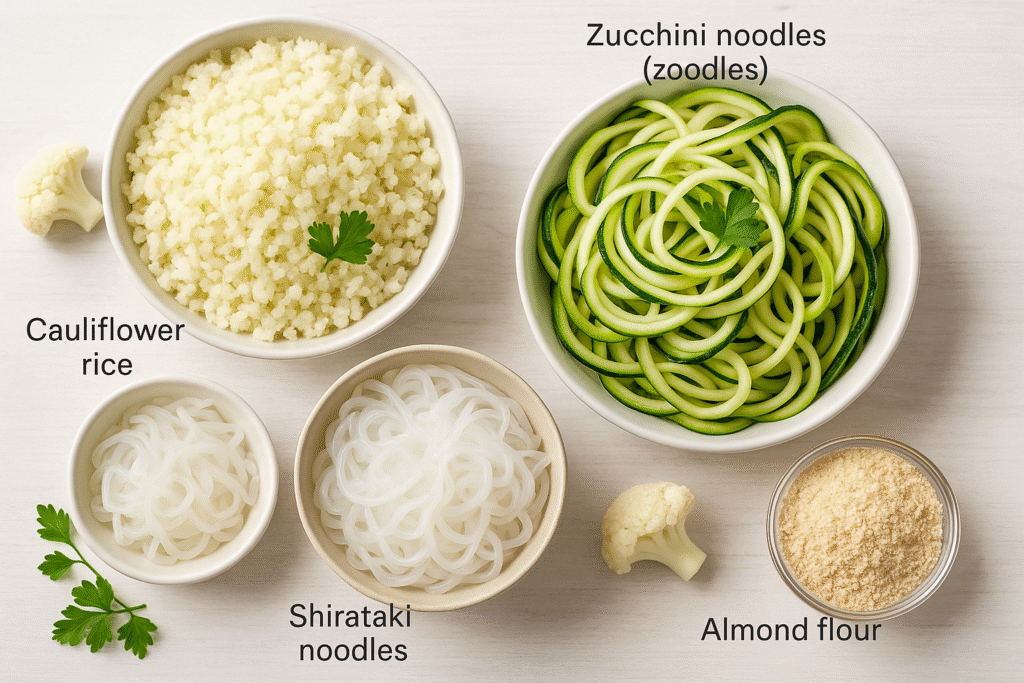
- Cauliflower Rice: The most popular grain substitute, riced cauliflower contains only about 3g of net carbs per 100g and is perfect for stir-fries, bowls, and side dishes.
- Zucchini Noodles (“Zoodles”): A fantastic substitute for pasta, zucchini noodles have around 3g of net carbs per 100g and work well with all your favorite sauces.
- Shirataki Noodles: Made from the konjac yam, these noodles contain zero net carbs and are an excellent pasta alternative.
- Almond Flour: A staple in low-carb baking, almond flour can be used to make bread, pancakes, and muffins with a fraction of the carbs of wheat flour.
Looking for delicious low-carb recipes? Explore hundreds of creative meal ideas using these grain alternatives at CheckTheCarbs.com/recipes.
Practical Tips for Managing Grain Intake
Successfully managing the net carbs in grains requires a mindful and strategic approach. Here are some practical tips to help you stay on track with your goals for managing net carbs in grains.
- Always Read Labels: Be vigilant about checking the nutrition facts on packaged foods. Look for the total carbohydrate and dietary fiber counts to calculate the net carbs. This is the most important step in understanding the net carbs in grains.
- Control Portions: If you choose to include whole grains, use measuring cups to ensure you are eating a small, controlled portion. Never eat grains directly from the bag or box.
- Prioritize Fiber: When choosing a grain product, such as bread or pasta, always opt for the whole grain version with the highest fiber content. More fiber means fewer net carbs.
- Focus on Alternatives: Embrace the versatility of low-carb vegetable substitutes. Experiment with cauliflower rice, zoodles, and other creative swaps to satisfy your cravings without the carbs.
Common Mistakes to Avoid
Warning: One of the biggest mistakes is falling for misleading marketing terms like “multigrain” or “made with whole grains.” These products are often still made primarily with refined flour. Look for the “100% Whole Grain” stamp to be sure. This is a common pitfall when trying to manage net carbs in grains.
Another common error is the “halo effect,” where people assume a food is healthy and can be eaten in large quantities simply because it is a whole grain. While brown rice is better than white rice, it is still a high-carb food that must be strictly portioned on a low-carb diet. The net carbs in grains, even whole ones, can add up quickly. Finally, be wary of “low-carb” packaged goods that use sugar alcohols or other additives. While these may have fewer net carbs, they can cause digestive distress for some people. Stick to whole, unprocessed foods whenever possible to best manage your intake of net carbs in grains.
Conclusion: Making Smart Choices About Net Carbs in Grains
Navigating the world of net carbs in grains is essential for anyone on a low-carb journey. The science is clear: refined grains, with their high net carb content and minimal nutritional value, are detrimental to metabolic health and should be avoided. Whole grains, while still high in carbohydrates, offer the benefits of fiber and nutrients and can be included in very small, controlled portions on a more liberal low-carb diet. A thorough understanding of net carbs in grains is your best tool for success.
For those on a strict low-carb or ketogenic diet, the most effective strategy is to embrace the wealth of vegetable-based grain alternatives. By understanding the data and making informed choices, you can successfully manage your carbohydrate intake, achieve your health goals, and enjoy a delicious and sustainable low-carb lifestyle. Your journey to mastering net carbs in grains starts now.
Ready to put this knowledge into practice? Use our free tool to calculate your daily net carb target and start building your perfect low-carb meal plan at CheckTheCarbs.com/calculator!
References
- Guo, H., Ding, J., Liang, J., & Zhang, Y. (2021). Associations of Whole Grain and Refined Grain Consumption With Metabolic Syndrome. A Meta-Analysis of Observational Studies. Frontiers in Nutrition, 8. https://doi.org/10.3389/fnut.2021.695620
- Li, Z., Yan, H., Chen, L., Wang, Y., Liang, J., Feng, X., Hui, S., & Wang, K. (2022). Effects of whole grain intake on glycemic control: A meta-analysis of randomized controlled trials. Journal of Diabetes Investigation, 13(11), 1814-1824. https://doi.org/10.1111/jdi.13866
- Ying, T., et al. (2024). Effects of whole grains on glycemic control: a systematic review and meta-analysis of randomized controlled trials. BMC Medicine, 22(1), 1-13. https://doi.org/10.1186/s12916-024-03312-3
RELATED POSTS
View all


Top High Net-Carb Foods to Avoid on Keto: Simple Swaps for Success
December 10, 2025 | by robbeaux
US Added Sugar Intake Trends: 1970-2023 Surveillance Analysis
March 17, 2026 | by Robert Elliott